Wed 28 Oct · 20:30 WET
FC Porto v Academico Viseu
Estádio do Dragão * · Porto
Portugal
Taça da LigaPlan a trip around this →
The relentless winning machine of the Portuguese north, at a stadium the metro drops you at the door of. The two ultra ends, the honest word on the pre-match, and why a league ticket is straightforward.
By Carlos O. · Last updated 15 Sept 2026
For a normal league game this is straightforward: no membership needed, but you must register on bilhetes.fcporto.pt before you can buy, and you enter with the Access Card downloaded from that account. A mid-table fixture is usually available to a visitor planning ahead. Members and season-ticket holders take up much of the ground, so buy early and the louder sections go first. The Clássico against Benfica is the hard one: for the September 2026 game the club opened a public sale nearly four weeks out at €93 to €160, but in past seasons it has sold out inside the members' sale, so register early or look at official hospitality. The Sporting derby caps the away end tightly and sells out fast too. Marquee European nights are opponent-dependent. Reselling above face value is a crime in Portugal; the only safe late tickets are season seats handed back to the club and resold through its own site.
FC Porto are the hard-nosed, chip-on-the-shoulder champions of the Portuguese north, and the identity of the club is bound up with the identity of the city: proud, industrious, unglamorous, and utterly convinced it is looked down on by the capital. Where Lisbon has Benfica and Sporting, Porto has the Dragons, "Os Dragões," and the fixture against Benfica, O Clássico, carries the full weight of that north-versus-Lisbon rivalry. This is a club and a support that take a fierce pleasure in winning and in being resented for it.
And win they do. Porto have been, for decades, a European overachiever punching far above the weight of a mid-sized league. They won the European Cup in 1987, beating Bayern Munich, and again in 2004 under a young José Mourinho, the triumph that launched him to the world, plus two UEFA Cup and Europa League titles. Much of that sustained success ran through one extraordinary figure, Jorge Nuno Pinto da Costa, the president for more than forty years until 2024, who died in 2025 and whose reign made Porto a serial winner and a serial subject of controversy in equal measure. The club sells and reloads talent as well as anyone on earth and keeps on collecting titles.
The Estádio do Dragão, the Dragon Stadium, was built for Euro 2004 and is a clean, steep, modern 50,000-seat bowl on the eastern side of the city. It is a good stadium to watch football in, and getting to it is about as easy as European away-days get.
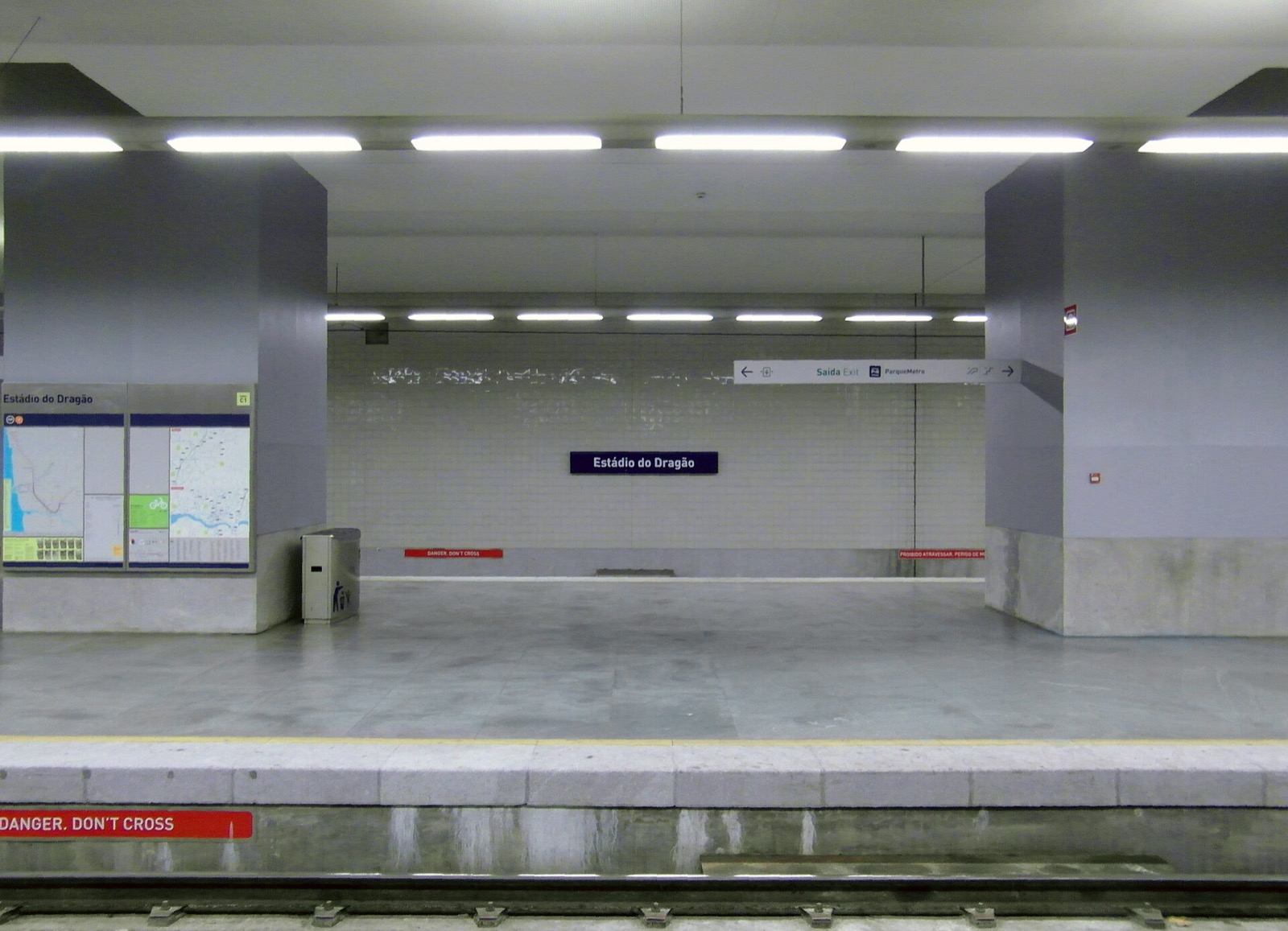
The metro could not be simpler: there is a station called Estádio do Dragão right beside the ground, served by several lines, and the ride out from the centre of Porto takes around fifteen minutes and leaves you a two-minute walk from the turnstiles. That is the way in. The mainline Porto Campanhã station is one metro stop away, or about a 20-minute walk, if you are arriving by train from elsewhere in the country. Road traffic clogs quickly around kickoff, so the metro is the plan, and coming out is the usual busy-station shuffle.
Know the immediate area: the streets right around the Dragão are not a matchday pub district, so this is not a ground where you spend the afternoon on the doorstep. There are a few options nearby, the no-frills cafés and tascas of the Campanhã neighbourhood and the bars along Rua do Heroísmo on the walk back toward town, where you can get a beer and a bifana without ceremony.
The better plan for most visitors is to make Porto itself the day out, because it is one of the loveliest cities in Europe. Spend your pre-match down in the Ribeira, the steep, tiled old town on the Douro river, and across the water in Vila Nova de Gaia among the port-wine lodges, then ride the metro out to the Dragão closer to kickoff. Porto is a city built for wandering and drinking well, and the football fits around it rather than the other way round. And do not leave without the francesinha, the city's mighty layered sandwich of cured meats and steak under melted cheese, drowned in a spiced beer-and-tomato sauce, with a glass of port in a Gaia lodge as the civilised bookend.
Porto's atmosphere comes from its ultras, and unusually it comes from both ends. In the upper tier behind the south goal are the Super Dragões, the club's main organised group and one of the best-known ultra outfits in Portugal, and in the upper tier at the north end the smaller Colectivo Ultras 95, and between them the drums, flags and chanting start well before kickoff and run through the game. On a Clássico against Benfica or a big European night the Dragão is loud, blue-and-white and genuinely hostile to visitors.
The calibration is the usual one for a modern bowl: the big games deliver, and a routine league fixture against weaker opposition can be quieter, particularly in the main side stands, which draw a calmer, more corporate crowd. If you want the noise, aim for a place near one of the ultra ends rather than the sides. Both groups' sectors are restricted zones for their registered members, with their own access rules, so buy a seat next to one rather than in it. Away fans are housed in a corner of the upper east stand.
This is the Super Dragões driving the Dragão:
The club anthem, the "Hino do FC Porto," goes up before kickoff and is roared back by the whole ground, and the ultra ends drive a steady stream of terrace songs across the ninety minutes. The tone of it all is that northern pride and defiance, the sense of a club that expects to win and expects to be disliked for it, and there is a real edge to the noise on a night when Lisbon are in town.
The FC Porto store is at the stadium, on the Dragão complex, with the full range and long matchday hours, and there is club retail in the centre of the city as well, so you can pick up a shirt without the trip east if you are staying near the river. The stadium store pairs with the museum and ground tour on a non-match day.
For a normal league game this is straightforward. You don't need to be a member, but the public sale on bilhetes.fcporto.pt is only open to registered fans, so create an account first; your way in on matchday is the Access Card you download from that account, one per ticket. A mid-table fixture is usually available to a visitor planning ahead, and the club's stores, including one in the Baixa, sell tickets too. Liga Portugal only fixes exact dates and kickoff times a few weeks out, and TV can move a game anywhere from Friday to Monday, so wait for the confirmed slot before you book flights around it. As with the other big Portuguese clubs, the members and season-ticket holders take up much of the ground, so buy early and the better and louder sections go first. Buying direct from the club, online or in its stores, is the first rule of buying a ticket anywhere abroad, and at Porto an unusually easy one to follow.
The Clássico against Benfica, the derby with Sporting and the marquee European nights are a step up. For the September 2026 Clássico the club opened a public sale nearly four weeks out, at €93 to €160 in the central stands, but in past seasons that game has sold out before the public got a look, so register early, watch fcporto.pt for each big game's sale dates, or consider official hospitality. Stay off the resale sites: selling a ticket for more than face value is a crime in Portugal, and the only safe late tickets are the season seats holders hand back to the club, which go on sale through the club's own site. Buy early and direct and a Porto league game is one of the more accessible big-club tickets in Europe.
Take Porto as a double bill: one of Europe's most charming cities and one of its most relentless football clubs. Spend the day down on the Douro with a glass of port, ride the metro out to the Dragão, get yourself near an ultra end for the drums and the defiance, and watch a club that has spent decades proving that the biggest names are not always in the biggest cities. For the football and the city together, few away-days give you more.
Ticket rules, prices and the club's fortunes all change; check anything time-sensitive the week you travel, and only buy through the club or an official seller.
Porto play at the Estadio do Dragao, a steep, modern 50,000-seat bowl built for Euro 2004 on the eastern side of the city. It's about as easy to reach as European away-days get, with a metro station of the same name sitting right beside the ground.
Yes, for a normal league game this is straightforward. You don't need to be a member, but you do need to register on the club's ticket site, bilhetes.fcporto.pt, before you can buy, and you get in with the Access Card you download from your account there. A mid-table fixture is usually available to a visitor planning ahead.
Yes, that's the exception. The Classico against Benfica and the Sporting derby are the hard ones, and European nights depend on the opponent. For the September 2026 Classico the club did open a public sale nearly four weeks out, at €93 to €160 in the central stands, but in past seasons that game has sold out before the public got a look, so register early or consider official hospitality. Reselling a ticket above face value is a crime in Portugal, so stay off the resale sites.
The metro couldn't be simpler: the Estadio do Dragao station sits right beside the ground, served by several lines, and the ride from the center of Porto takes around fifteen minutes and leaves you a two-minute walk from the turnstiles. Porto Campanha, the mainline station, is one metro stop away, or about a 20-minute walk.
It comes from both ends. The Super Dragoes fill the upper tier behind the south goal and the Colectivo Ultras 95 sing from the upper tier at the north end, and between them the drums, flags and chanting start well before kickoff and run through the game. On a Classico or big European night the Dragao is loud and genuinely hostile to visitors; the main side stands draw a calmer, more corporate crowd on routine fixtures.
Dates more than a few weeks out show as “date & time TBC”. When do fixtures get confirmed? →