Serie A: a first-timer's primer before you plan a matchday
The home of the ultras and the curva, the most theatrical fan culture in Europe, at grounds that are half-cathedral and half-relic. The famous stadiums, the named-ticket rules that catch visitors out, the underrated gems, and how tickets really work.
By Carlos O. · Last updated 23 Jul 2026
Italian football gives you the most operatic supporter culture in Europe: the curva, the ultras, the giant hand-painted tifos and the wall of coordinated noise behind each goal. It also gives you some of the game's most atmospheric old grounds and, in the same breath, some of its most bureaucratic ticketing. Serie A is a wonderful away-day if you go in understanding how the curva works, how the named-ticket system works, and which fixture you are actually chasing. This primer is the lay of the land; when you settle on a club, each of the grounds below has its own full guide.
Famous grounds to see
The five Italian giants we cover in depth take you from the great shared cathedral of Milan to the volcanic south.
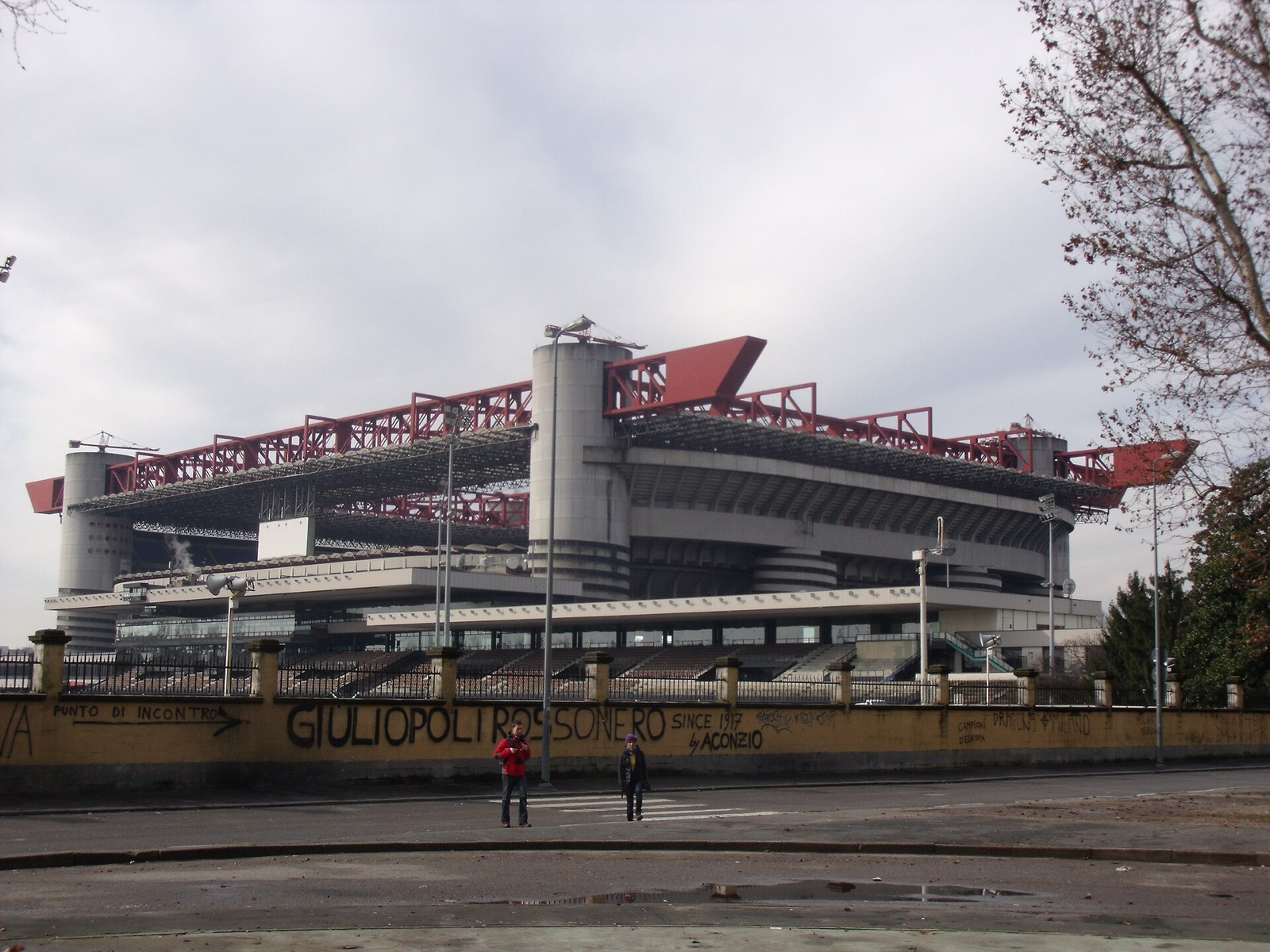
- The San Siro, home to both Inter and AC Milan, is one of the great stadiums of the world, a towering three-tier bowl the two clubs share and have now bought together, with plans to largely demolish and replace it later this decade.
- Napoli play at the Stadio Maradona, a raucous, intense athletics bowl in the Fuorigrotta district that shakes on a big night in a city where football is close to religion.
- Roma fill the Curva Sud at the Stadio Olimpico, a shared Olympic stadium with a running track and a ferocious home end.
- Juventus are the outlier and the model for the future: their Allianz Stadium is a tight, modern, club-owned ground with no track and the crowd right on top of the pitch, more Premier League than old Italian bowl.
This is the Maradona in full voice:
Matchday culture to know
A few things about an Italian matchday routinely surprise visitors.
The curva is the whole show. Behind each goal, the curve (Curva Nord and Curva Sud) house the organised ultras, who run the singing, the flags and the choreography for the full ninety minutes, often with their backs to the pitch conducting the crowd. This is the atmosphere you came for, and it is a different, more theatrical thing than an English crowd. It has a complicated side too: the ultra groups wield real power, and recent years have seen major police investigations into ultra leaderships at Inter and Juventus over ticket-touting and organised crime, with the fallout including boycotts and stretches of deliberate silence.
Tickets are named, so carry matching ID. Italian tickets are nominative: the buyer's name is printed on each one, passing a ticket to someone else means an official name-change beforehand, and the cheapest tickets often block that entirely. How hard the name is actually checked at the gate varies a lot. It is strict in the away sector, for big or high-risk matches, and anywhere a fan-card is scanned through the turnstile; at a routine home game the barcode is often all that gets read. But a mismatch can officially cost you entry with no refund, so travel with ID that matches each name in your booking, and never count on a ticket bought off a stranger scanning through. Named tickets are spreading through European football, but Italy pushes the idea harder than anyone: Spain prints a name and rarely looks at it, while an Italian away sector will.
Some grounds have running tracks. The Olimpico in Rome and a few others are athletics stadiums, which sets the stands back from the pitch, a genuine trade-off against the tighter, club-built grounds like Juventus's.
Kickoff times land in uneven blocks. The round is in the fixture list from the summer, but the exact day and slot get set in batches rather than on a published schedule: an autumn game is usually timed well ahead, while a run-in fixture can wait until the week of the match, once the table has decided which games television wants. Plan the weekend first and confirm the kickoff later.
Alcohol and away fans are controlled. Full-strength drink is often restricted, and the authorities routinely ban or limit away fans for fixtures they deem high-risk, so a derby or a big match can be a one-sided, home-only crowd.
Underrated grounds and derbies
The five we cover are the giants, but some of Italian football's best days out are elsewhere.
- Atalanta's Gewiss Stadium in Bergamo has been rebuilt into one of the tightest, loudest, most modern grounds in the country, carrying a club that has gatecrashed the elite.
- Genoa and Sampdoria share the Luigi Ferraris at Marassi, a steep, old-fashioned English-style ground that many reckon the most atmospheric in Italy, and their Derby della Lanterna is a fierce shared-city rivalry when both are in the top flight.
- Fiorentina's Artemio Franchi in Florence and Torino's Grande Torino carry deep, proud support away from the biggest names.
For derbies, the Derby della Madonnina between our own Inter and Milan is one of the great occasions in the sport; the Derby della Capitale, Roma against Lazio who share the Olimpico, is among the most intense and politically charged in Europe; the Derby d'Italia, Juventus against Inter, carries decades of needle; and the Derby della Mole pits Juventus against Torino.
Ticket trends
For a normal Serie A game, a visitor can usually get in, with Italian catches to respect.
Buy online, named, with ID. The clubs sell single-match tickets through their official channels and platforms like Vivaticket and TicketOne, tickets are named to a person, and your ID can be checked at the gate. Travel with matching ID.
The curva and big games need more. The ultra ends and certain high-demand or "high-risk" fixtures can require a club fidelity card, the descendant of the old Tessera del Tifoso, so if the curva is the goal, sort the card in advance. Derbies and marquee European nights sell out fast and carry the tightest restrictions.
Resale is illegal. Reselling above face value is against the law in Italy, and because tickets are named, one bought off a stranger or a third-party site can simply fail the check at the turnstile. Buy through the club for a league game, and use official hospitality or an authorised package for a sold-out big one.
The bottom line
Serie A rewards a fan who wants theatre over polish: the curve in full cry, a tifo unfurling, the San Siro or the Maradona at full volume. Sort your named ticket in advance, carry your ID, pick a big fixture if you want the cauldron, and consider one of the underrated grounds, Bergamo or Marassi, if you want the atmosphere without the giant-club ticket scramble. When you have a club in mind, its full guide has the getting-there, the curva, the food and the honest ticket reality.
Ready to go to a Serie A game?
Pick a club above for its upcoming home fixtures and the honest ticket reality, then build the trip around a date you can actually get into.
Wondering why far-future dates show as TBC? When Serie A confirms its kickoff times →