Sun 01 Nov · 20:45 CETJuventus–Napoli
Juventus FC v SSC Napoli
Allianz Stadium · Turin
Italy
Serie APlan a trip around this →
Italy's most successful and most resented club, at the sleek ground it built for itself. La Vecchia Signora, the truth about Calciopoli and the quiet Curva, and how a tourist actually gets in.
By Carlos O. · Last updated 7 Aug 2026
Straightforward for a normal game, tighter for the big ones. Anyone can buy single-match tickets online direct from the club, no membership needed for general seating, but it's online-only and every ticket is named to a person, and your ID can be checked against it at the gate. The curva ends and the Derby della Mole against Torino sell out fast and cost more, and Juventus's other biggest away draws squeeze the general public window too: the Derby d'Italia against Inter has sold out entirely inside the members-only presale in past seasons, and Napoli and Milan visits stack several weeks of member and season-ticket-holder priority before whatever is left reaches public sale. Reselling above face value is illegal in Italy and a resold ticket can fail the name check at the turnstile, so for a guaranteed seat on a marquee fixture use the club's authorised tourist-package agents rather than the open market.
Juventus are the most successful club in Italian football and, not unrelatedly, the most resented. To their own they are La Vecchia Signora, the Old Lady, and the closest thing Italy has to a national institution: owned by the Agnelli family, the dynasty behind Fiat, for over a hundred years, followed all down the peninsula, especially in the south, by people who never lived near Turin. To everyone else they are the establishment club, the team that always seems to win and always seems to have the referees' ear. Both readings are earned, and a matchday sits inside that tension.
The winning is the easy half. Somewhere around thirty-six league titles, a conveyor belt of great sides, and a shirt, "Fino alla fine," to the end, that they now wear on the collar. The harder half is Calciopoli, and it's worth getting right because casual accounts get it wrong. In 2006 wiretaps revealed Juventus's general manager in regular contact with the officials who assigned referees. The club was relegated to Serie B, docked points, and stripped of two league titles. But, and this is the part usually lost, no actual match-fixing was ever established; the offence was influence over who refereed, not proof of rigged results, and the season itself was later ruled legitimate. Juventus were also punished far more harshly than the other clubs caught up in it, which is why, twenty years on, a lot of Juventus fans still treat the whole thing as a set-up rather than fair punishment. They won Serie B comfortably and came straight back. You do not need to take a side, but you should know the argument is live, because it colours how the rest of Italy sees this club.
The ground reflects the modern, corporate Juventus. In 2011 they opened the Allianz Stadium, the first ground in Italy built and owned by a major club, on the site of the vast old Stadio delle Alpi they'd shared and hated. It's small by giant-club standards, about forty-one thousand, but steep, close to the pitch and genuinely loud when it wants to be, closer in feel to an English ground than the running-track bowls most Italian clubs still play in. Building it, and owning it, was a statement about being a modern European business, not just a football club.
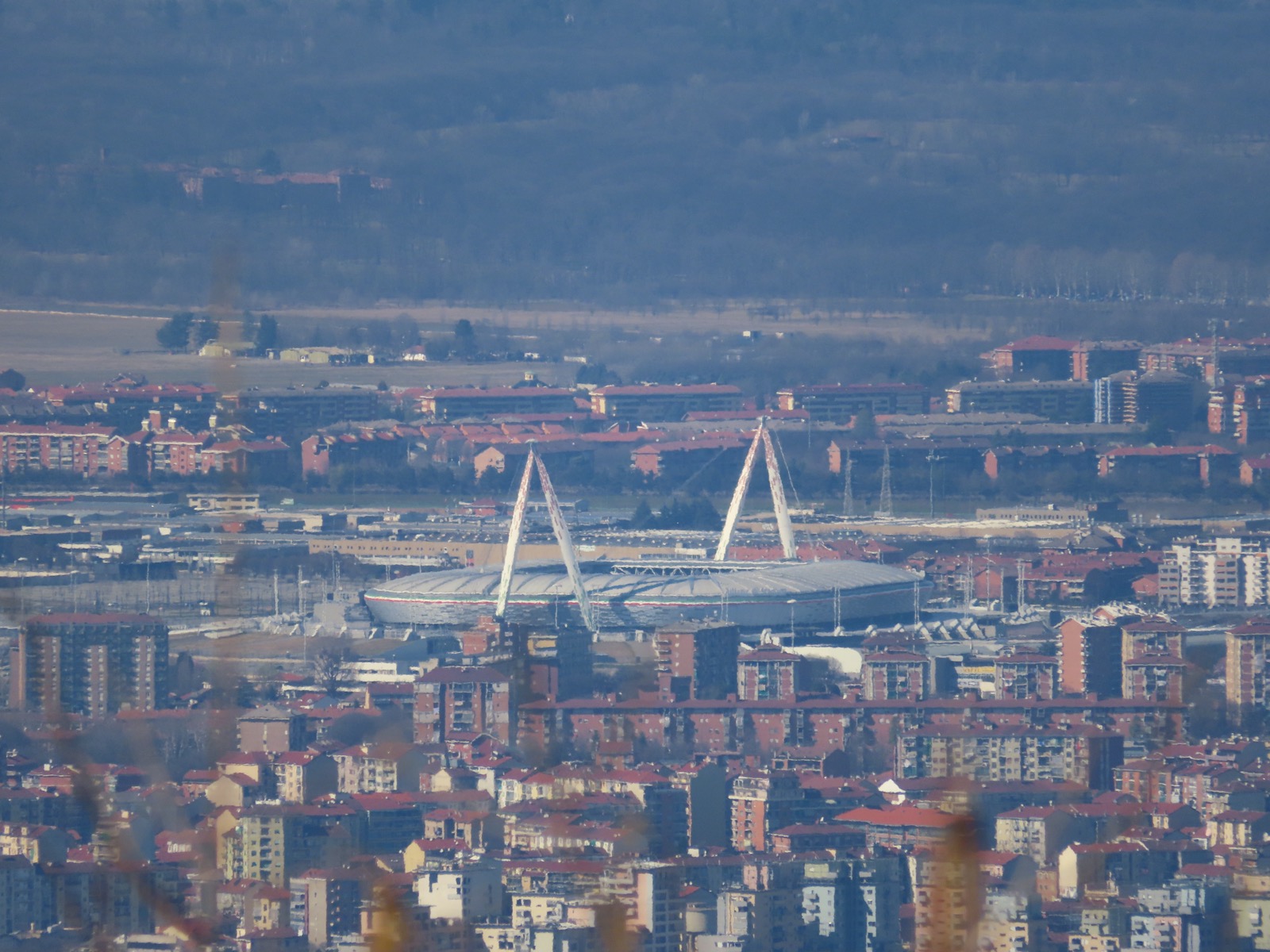
Be clear on this before you plan the day: the stadium is not in the middle of Turin. It's out in the Continassa district, roughly six kilometres northwest of the historic centre, and it is not a walk from your hotel. The city's transport authority runs a reinforced matchday service, a bus route marked "9/" that starts a couple of hours before kickoff and runs to about forty-five minutes after the final whistle, linking the ground back to the main Porta Nuova station and connecting with the metro at Bernini. Otherwise it's the metro to Massaua and a bus, one of the direct bus lines, or a taxi that'll run you around twenty euros from the centre in normal traffic. Budget real time each way, and expect the return leg to bottleneck at the metro interchange.
Reset your expectations: an Italian matchday is not a pub crawl, and the fact that the ground is six kilometres out kills any idea of a dense cluster of pre-match bars around it. There is essentially one spot worth knowing right by the stadium, Linopassamilvino, directly opposite, which does grilled arrosticini skewers and beer and works as a meeting point. Beyond that, the ground is ringed by car parks and the Area12 shopping complex, with no bar scene.
The real pre-match and post-match life is in the centre, disconnected in time and place from the walk to the turnstiles, which is normal for Italy. Turin invented the aperitivo as a commercial ritual and takes it seriously: a vermouth, both Martini and Cinzano were born here, or a bicerin, the city's own layered chocolate-coffee-cream drink, at a historic café like Caffè San Carlo on the grand Piazza San Carlo, then dinner, then out to the game. For a more football-flavoured pre-match pint, Murphy's on Piazza Carlo Felice is the Irish pub that fills up on Champions League nights. Inside the ground, Italian rules mean any beer is served in plastic cups only, and for higher-risk fixtures the city can ban strong-alcohol sales in a zone around the stadium entirely.
The honest word on the atmosphere is that it's a fraction of what the legend promises, and for a specific, documented reason, and not vague decline.
The Curva Sud is the ultras end, and for decades it was a serious, organised, intimidating operation. Then two things gutted it. In 2018 the club's own president was found to have bulk-sold tickets to supporter groups connected to the Calabrian mafia, and Juventus were punished with a match played in front of an empty Curva Sud. Then in 2019, in an operation the police called "Last Banner," the leaders of the ultras groups were arrested for effectively extorting the club, using boycotts and threats to squeeze free tickets and Champions League allocations out of the management. Between the prosecutors and the club's own security clampdown, the organised support that generated the wall of noise was broken up, and it has never really recovered. Fans will tell you plainly that the atmosphere is a shadow of what it was; a first-time visitor buying a midweek league ticket should go in expecting an intimate, modern, watchable stadium rather than a cauldron.
The one to know is the anthem, "Juve (Storia di un grande amore)," Juve, story of a great love. It came out of a fan competition in the mid-2000s, is performed in the version by the singer Paolo Belli, and is played before every home game; the title tells you the register, unashamedly sentimental, and the ground sings it. The other phrase you'll see everywhere, on the shirt collar and the banners, is "Fino alla fine," to the very end, which started as a terrace chant and became the official club motto. This is the anthem inside the ground:
The main Juventus Store in the centre is on Via Garibaldi, the long pedestrian shopping street, with another store out at the stadium inside the Area12 complex. The stadium is also home to the J-Museum and the stadium tour, which is a genuinely good visit on a non-matchday and, given how far out the ground is, worth pairing with the game or doing as its own trip rather than a rushed add-on. Book the tour in advance; it's guided and capacity-limited.
For a normal Juventus game this is refreshingly simple by Italian standards, with a couple of catches. Anyone can buy single-match tickets online, directly from the club, with no membership required for general seating; you don't need the old fan-card for an ordinary seat. The two things to know: it's online-only, the club has scrapped physical box-office sales, and every ticket is named to a specific person, so travel with matching ID for each seat in your booking. The name can be checked against your ID at the gate, strictly in the away end and for the big fixtures, even if a routine league game is often just a barcode scan.
One nuance if you're chasing the singing ends: the curva sections, and any seat you take over from a season-ticket holder, generally still require a Juventus Card, the cheap fan-ID card that replaced the old tessera del tifoso and that the ticket gets loaded onto to let you through the turnstile. A plain seat for an ordinary league game generally does not need it. Champions League tickets run their own way: Juventus Card holders get an early sale window and the curva sections stay tied to the card, so don't count on it being waived for the European nights. If the curva is the point, buy the card from the club well in advance.
The big games are a step up. The curva ends and the Derby della Mole against Torino sell out faster and cost more, and demand for the marquee European nights compresses the window. If you want a guaranteed seat for one of those, the clean route is the club's own authorised tourist-package agents, who bundle a verified ticket with the trip, rather than the open market. That matters here because reselling above face value is illegal in Italy, and because the named-ticket system means a ticket bought off a stranger can simply fail the ID check at the turnstile. Treat any third-party resale site as both a legal and a practical risk. That last part is not a Turin peculiarity: resale is where trips abroad tend to go wrong, and the named-ticket system here only makes the failure quicker.
Named tickets and an online-only sale are Italian league rules that apply across Serie A, and planning an Italian trip covers the paperwork before you reach checkout.
Plan the day around the distance, not the drama. This is a club whose ground is a real trek from the beautiful city it belongs to, so give yourself the time, use the matchday bus, and build in the aperitivo and the museum rather than trying to sprint the whole thing around ninety minutes. Go knowing what Juventus are, the winning machine half of Italy loves and half of Italy loves to hate, and the matchday makes a lot more sense.
Ticket rules, the matchday transport service and the pre-match scene all shift season to season. Check anything time-sensitive the week you travel, and buy every ticket through the club or its named official agents.
Juventus play at the Allianz Stadium in the Continassa district, about six kilometers northwest of central Turin. Opened in 2011, it was the first ground in Italy built and owned by a major club, and at around 41,000 seats it's smaller but steeper and louder than the running-track bowls most Serie A clubs still use.
Yes, and it's refreshingly simple by Italian standards. Anyone can buy single-match tickets online direct from the club with no membership needed for general seating. The catches: it's online-only, every ticket is named to a person, so travel with matching ID for each seat in your booking, and the checkout asks for a tax ID for your country of residence. Visitors report getting through that field with their own national number rather than an Italian codice fiscale.
If you want the curva ends, you'll generally need a Juventus Card, the fan-ID card the ticket loads onto, and Champions League curva sales run through it too. The Derby della Mole against Torino and the big European nights sell out faster and cost more. For a guaranteed seat on those, use the club's own authorised tourist-package agents, never the open resale market.
The stadium isn't in central Turin, it's about six kilometers out in Continassa. The city runs a reinforced matchday bus route marked 9/ that links the ground to Porta Nuova station and connects with the metro at Bernini. You can also take the metro to Massaua and a bus, or a taxi that runs around twenty euros from the center, though that fare is an inbound one: visitors consistently report drivers refusing or cancelling the trip back after a match, so plan the return before you go rather than expecting to flag one down.
The Curva Sud is the ultras end, but the noise there is a fraction of its old reputation. A 2018 ticket scandal and a 2019 police operation against the ultra leadership broke up the organized support that used to generate the wall of noise. Go in expecting an intimate, modern, watchable stadium, and no cauldron.
Dates more than a few weeks out show as “date & time TBC”. When do fixtures get confirmed? →