Sat 31 Oct · 21:00 CET
FC Barcelona v Alaves
Camp Nou · Barcelona
Spain
La LigaPlan a trip around this →
Catalonia's club, at a half-rebuilt Camp Nou. The story worth knowing, the anthem, and the honest word on tickets, the tourist crowd, and where the noise actually is.
By Carlos O. · Last updated 7 Aug 2026
Unusually open for a giant: outside the marquee fixtures, tickets reach general sale with no membership required, buyable direct from the club a few weeks out at real tourist prices. It's tighter than it used to be, though. Barça moved back into Spotify Camp Nou in November 2025 after two seasons playing at Montjuïc, and the stadium is still mid-renovation, running at roughly 62,000 seats versus the old full bowl, with the final tier not due until 2027, so even ordinary games have less spare inventory than before the rebuild. El Clásico and the Espanyol derby are a different world: both sell out almost entirely through the Socio priority window before general sale opens, so plan on hospitality or verified resale instead of the club's own site. Tickets are named and non-transferable, so third-party resale risks a ticket that gets cancelled and won't scan, and unofficial sellers around the ground are a real scam risk.
Start with the thing that makes Barça Barça, because the day at the ground lands differently once you have it: this isn't a football club that happens to be Catalan. It's one of Catalonia's central institutions that happens to play football. For a lot of Catalans the club has carried a sense of who they are for well over a century, especially through the long stretch when that identity was actively suppressed, which is the history that follows.
The club was founded in 1899 by a Swiss, Joan Gamper, which tells you something in itself: outward-looking from day one. The darker, defining part came later. Josep Sunyol, a Catalan politician and the club president, was arrested by Franco's troops in 1936, early in the Spanish Civil War, and shot. A sitting club president, executed by the forces of the man who then ruled Spain for nearly forty years. Through that dictatorship the Catalan language was banned in public life, and the football terrace became one of the only places tens of thousands of people could gather and sing and shout in their own language, under the cover of a match. That's where "més que un club," more than a club, comes from. It was coined in 1968 and it isn't a slogan the marketing department invented. It's a claim the club has spent ninety years living up to.
The football matched the meaning for a while. Johan Cruyff, a folk hero here first as a player and then as the manager who built the early-90s Dream Team, hard-wired a philosophy of possession and positional play into the club and rebuilt its academy, La Masia, around it. Two decades later that produced the Guardiola and Messi side of 2008 to 2012, the team that won six trophies in a single year and that plenty of people still call the best club side ever assembled. Then the money ran out. The club nearly bankrupted itself chasing that peak, could not afford to register its own greatest player under the league's rules, and lost Messi to Paris in 2021 in what fans still describe as a death in the family. It has been selling off future income, "the levers," to stay afloat ever since. A club that reached the summit and nearly died trying to stay there. That tension is in the air at every game.
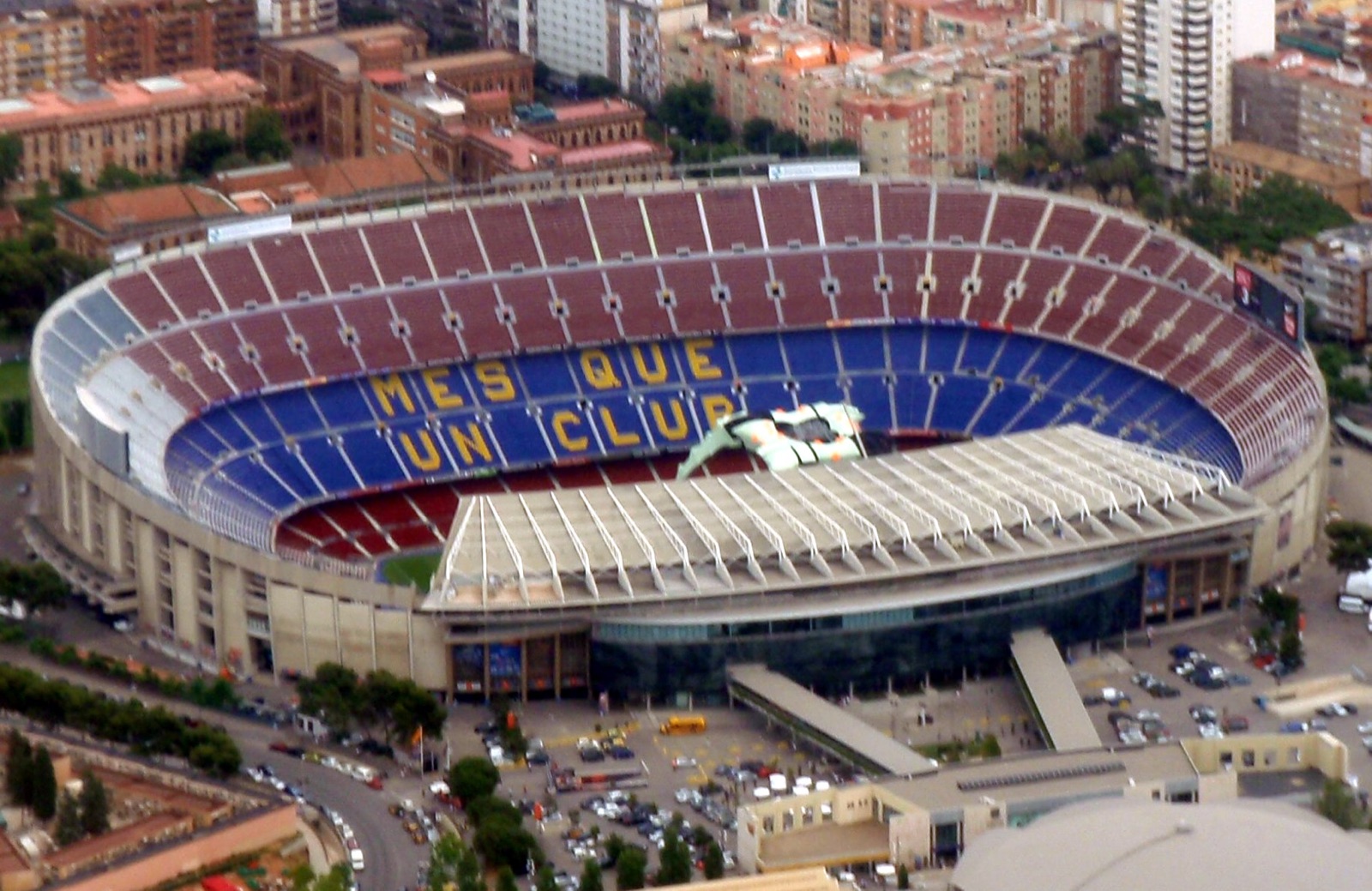
A practical heads-up before anything else: the ground is a building site that's slowly reopening. Barça spent two and a half seasons in exile at the Montjuïc Olympic stadium while Camp Nou was rebuilt, and moved back into a partly finished Spotify Camp Nou in late 2025, playing to a reduced capacity of around 62,000 while the upper tiers are completed. They're set to stay there through 2026-27, with a possible short return to Montjuïc around 2027-28 for the roof. Check which ground your match is at when you book, because for a season or two it's genuinely worth confirming.
First thing to unlearn: this is not an English pub day, and trying to make it one will only disappoint you. There's no pre-match session, no wall of fans in a bar by the ground. The Spanish rhythm is a few tapas and a caña or a vermut, taken properly and unhurried, and kickoffs are often late, 9pm or later for the big weekend games. The other surprise: Spanish law means no alcohol is sold inside the stadium, so the beer happens before, not during.
The area right around Camp Nou, Les Corts, is residential and businessy rather than a bar quarter, so don't build your day around it. There's a modest, neighbourhood-scale run of bars and tapas places along Travessera de les Corts if you want something near the turnstiles, but it's a handful of spots, not a scene.
What locals and in-the-know visitors actually do is eat and drink in the centre and take the metro out. Base yourself around Sant Antoni, Gràcia, El Born or the Eixample, do the proper thing, an early-evening vermut and a few good tapas, and then ride the green line out to the ground with an hour to spare. That base earns its keep beyond the one match, too, since the smaller Catalan clubs are a short train ride out and La Liga spreads a round from Friday to Monday, so a weekend here can hold more than one game if the fixtures fall right. The one honest food tip for inside: the stadium food is scarce and forgettable, so the local move is to carry a wrapped bocadillo through the gate for half-time.
Two warnings worth heeding. Barcelona has a serious pickpocket problem, and the post-match crush and the metro are prime hunting ground, so keep your phone and wallet where you can feel them. And the tourist-trap restaurants along La Rambla are exactly that; eat a street or two off it, not on it. If Barça win something big, the traditional place the city gathers to celebrate is the Font de Canaletes fountain at the top of La Rambla.
Camp Nou has no metro station of its own yet, one isn't due until around 2030, so you walk in from a few stops that ring the ground. On the green line (L3) that's Les Corts, Palau Reial or Maria Cristina; on the blue line (L5) it's Collblanc, which comes at the ground from the south. Any of them is a five-to-ten-minute walk to a gate. Give yourself time.
Coming out is the usual big-stadium crush, made worse by everyone funnelling to the same handful of stops. The local move is to walk a stop further out, toward Zona Universitària or Maria Cristina, and get on there rather than fighting the scrum at the nearest entrance.
Camp Nou has a reputation as a huge, quiet, tourist-filled ground, and it's earned. But the usual explanation, that it's all day-trippers who won't sing, misses what's actually been going on.
The bigger reason it went flat is a fight between the club and its own hardcore support. The traditional animation groups, the penyes who ran the singing end, were kept out of the ground for a long stretch, reportedly in a standoff over an unpaid fine, and the atmosphere was gutted for months. There was a partial reconciliation in early 2026, and the club has opened a new dedicated singing section, Gol 1957, in the south end, the Gol Sud. So it's recovering, but a normal league night can still be a strange, muted experience for a ground this size, and you should go in expecting that rather than the roaring cathedral of the highlight reels. On a Champions League night, or a Clásico, it's a different animal.
One thing to get right on the current layout: the new Gol 1957 singing section sits in the first tier of the Gol Sud, the south end, and away fans are put high up in the upper tier of that same south stand, above and away from the singing core. The Gol Nord at the north end reopened as home seating in the phased rebuild. If you're choosing a seat and you want the full effect, the upper ring is where the whole-ground mosaic and the anthem land hardest, looking down on the lot of it. This is what it looks like when the ground is full and singing:
Get there for the anthem. Before kickoff the whole ground sings the Cant del Barça in Catalan, scarves up, and it builds to a line every first-timer will hear the crowd roar, "tot el camp és un clam," the whole ground is a roar, and then the three-beat payoff, "Barça, Barça, Baaarça." It's the best moment of the night at a lot of games, better than anything in the match.
The one that will genuinely confuse you if nobody warns you: at exactly 17 minutes and 14 seconds of the game, a large part of the crowd chants "Independència." The time is deliberate. It encodes the year 1714, when Barcelona fell at the end of the War of the Spanish Succession and Catalonia lost its institutions, and the 11th of September is now Catalonia's national day. Once you know what it is, it stops being a random noise and becomes one of the more remarkable things you'll see in a football ground.
While you're reading the crowd: the red-and-yellow striped flags are the senyera, the flag of Catalonia. The ones with a blue triangle and a white star are the estelada, the pro-independence flag. Knowing the difference is a small thing that reads you as someone who gets it.
The FCBotiga megastore at the ground is the big one, thousands of items, a "Make it Barça" station where you can personalise a shirt on the spot, and it flows straight into the club museum. There are city-centre stores too, the handiest being La Rambla 124, if you'd rather not make the trip out just to shop.
The shirt is worth a word, because it carries the story. Barça went more than a hundred years with a bare, unsponsored front, refusing to sell the space as a matter of pride. When they finally put something on it in 2006, it wasn't a sponsor: it was UNICEF, and the club paid them for the privilege, the only reverse sponsorship in football. For a lot of fans that UNICEF shirt, worn through the Messi golden years, is the one to own. If you want the club's whole meaning on your back, look for a Senyera edition in the colours of the Catalan flag, or a Dream Team retro. The plain current shirt with your name on it is the easy keepsake.
The good news, and it's genuinely different from most giant clubs: you don't need to be a member to get in. Barça sell single-match tickets to the general public directly on their own site, and for an ordinary league or cup game you can often buy right up to matchday. Members, the socis, just get a priority window first. The catch is price, not access: tourist tickets aren't cheap, and the good games are a different story entirely.
The Clásico against Real Madrid and the big Champions League nights are brutal. The cheapest Clásico seats sell out the instant they're released and the next band up runs into the hundreds, with the marquee lower-tier and VIP seats into the thousands. There is no cheap, safe, reliable way for an unconnected visitor into a Clásico, so be honest with yourself about that one.
The honest routes, best first, are on the panel above, and they're the standard playbook for buying a ticket abroad with the enforcement turned up. Buy direct from the club for a normal game. If it's sold out, the one trustworthy secondary source is the club's own resale of member seats, where socis release the seat they can't use and it comes back on official sale, usually a few days before the game. Official hospitality is bookable by anyone at a price if you want a guarantee.
And a real warning specific to here. Barça tickets are now named and non-transferable, ID is checkable at the gate, and the club cancels tickets it finds sold through third-party resale sites, so one of those can leave you turned away at the turnstile no matter what you paid. On top of that, counterfeit-QR ticket scams operate around Camp Nou at scale. So the grey market is a genuine last resort, not a shortcut, and if you use it, know you're taking a real risk of not getting in.
If your dates are flexible, the easiest and most atmospheric first Barça game to catch is the Joan Gamper Trophy, the pre-season friendly usually played in mid-August, named after the founder. Low stakes, a full house, the anthem and the mosaic, and far easier to get into than a league game.
That's the club. Founded by an outsider, martyred under a dictator, built into a nation's identity, taken to the top of the sport and nearly ruined by the fall. It's playing in a half-built stadium with a complicated mood right now, and it's still més que un club. Learn the anthem, watch the clock at 17:14, keep a hand on your pocket, and you'll have done it properly.
Camp Nou is mid-rebuild and prices and ticketing rules shift constantly, so confirm the ground and check anything time-sensitive the week you travel. Buy every ticket through the club.
Barça play at Spotify Camp Nou in the Les Corts district. The club spent two and a half seasons at the Montjuïc Olympic stadium while Camp Nou was rebuilt, then moved back into the partly finished ground in late 2025 at a reduced capacity of around 62,000 while the upper tiers are completed. Check which stadium your match is actually at when you book.
Yes, and it's unusually open for a giant club. Anyone can buy single-match tickets directly from FC Barcelona's own site, no membership required, and for an ordinary game you can often buy right up to matchday, though at real tourist prices. Members just get a priority window first.
The Clásico and big Champions League nights are a different world: the cheapest seats sell out the instant they're released and the next band runs into the hundreds or thousands. Tickets are named and non-transferable, so buying through a third-party reseller risks a cancelled ticket that won't scan, and fake-QR scams operate around the ground.
Camp Nou has no metro station of its own yet, none is due until around 2030, so you walk in from stops that ring the ground: Les Corts, Palau Reial or Maria Cristina on the green line (L3), or Collblanc on the blue line (L5), all a five-to-ten-minute walk to a gate. Leaving is a crush, so locals often walk a stop further out, to Zona Universitària or Maria Cristina, and board there instead.
The singing lives in the Gol Sud, the south end, where the club reopened a dedicated section called Gol 1957 in early 2026 after a long standoff with its traditional supporter groups had gutted the atmosphere for months. A normal league night can still be a muted experience for a ground this size; a Champions League night or a Clásico is a different animal.
Dates more than a few weeks out show as “date & time TBC”. When do fixtures get confirmed? →