Mon 26 Oct* · 20:30 CET
Paris Saint Germain v Olympique Lyonnais
Parc des Princes · Paris
France
Ligue 1Plan a trip around this →
The bought club that chased one cup for a decade and lifted it at last. The Virage Auteuil, the anthem, and the honest word on tickets, scams, and a ground whose days may be numbered.
By Carlos O. · Last updated 7 Aug 2026
Unusually open at the top of the range, and unusually brutal at it. Anyone can buy single-match tickets direct from the club with a free account, and an ordinary Ligue 1 game against a lower-table side is a genuine general-sale buy for an unconnected visitor: start watching the site a few weeks out rather than the week of, since season-ticket holders and members already fill most of the 47,929-seat Parc des Princes before general sale opens. Back-to-back Champions League titles in 2025 and 2026 have only tightened the games that were already tough: Le Classique against Marseille and Champions League nights sell out in the member window, and even an ordinary league-phase night against a modest side like Slovan Bratislava has sold out through official channels. Le Classique also carries a standing away-fan ban that cuts both ways: a Paris police order, renewed every season since 2015, keeps Marseille supporters out of the Parc des Princes and the streets around it, mirroring the ban PSG fans face at the Vélodrome. Tickets are named, and your ID can be checked against the name, and third-party resale is both against the rules and a live scam target here, so the club's own TicketPlace exchange is the only safe way into a sold-out game.
Every other club in this series had a century to become itself. PSG did it in about fifteen years, with a sovereign wealth fund's money, and that is the first thing to understand about a matchday here: you are watching the most expensive project in the sport's history, in a city that is only half sure it wants it.
The club was assembled, not born. Paris Saint-Germain was created in 1970 out of a merger, to give the capital a big team, and for forty years it was a decent-not-great one, a couple of league titles and a single European trophy, the 1996 Cup Winners' Cup. Then in 2011 Qatar Sports Investments bought it, and the money arrived by the hundred million. Ibrahimovic, then Neymar and Mbappe, then Messi: PSG spent a decade buying the best players alive and winning France easily, and every single year the one trophy it actually wanted, the Champions League, slipped away. It became the club's defining wound, the running joke, the thing rival fans reached for first.
And then it stopped being funny for them. In May 2025, with the galacticos gone and a young side built around Ousmane Dembele and Vitinha under Luis Enrique, PSG won the Champions League, beating Inter 5-0 in Munich, the biggest final win in the competition's history. Only the second French club ever to lift it, after Marseille in 1993. A year later they did it again, edging Arsenal on penalties in Budapest, which made them the first French club to win it twice. The wound closed. A club that had spent everything and won nothing that mattered suddenly had the only thing it was missing, twice. That is the emotional weather over the Parc des Princes right now, and it is very different from the weather even eighteen months ago.
The other half of the club is older than the money and doesn't answer to it. "Ici c'est Paris," this is Paris, was a supporters' phrase long before it became a marketing slogan, and the tension between the two, the global brand and the local fans who were here before Qatar, runs through everything, including the ticket line and the atmosphere. PSG is also, in France, the club everyone outside Paris loves to hate: bling, moneyed, the capital's arrogance made into a football team. You will feel some of that too.
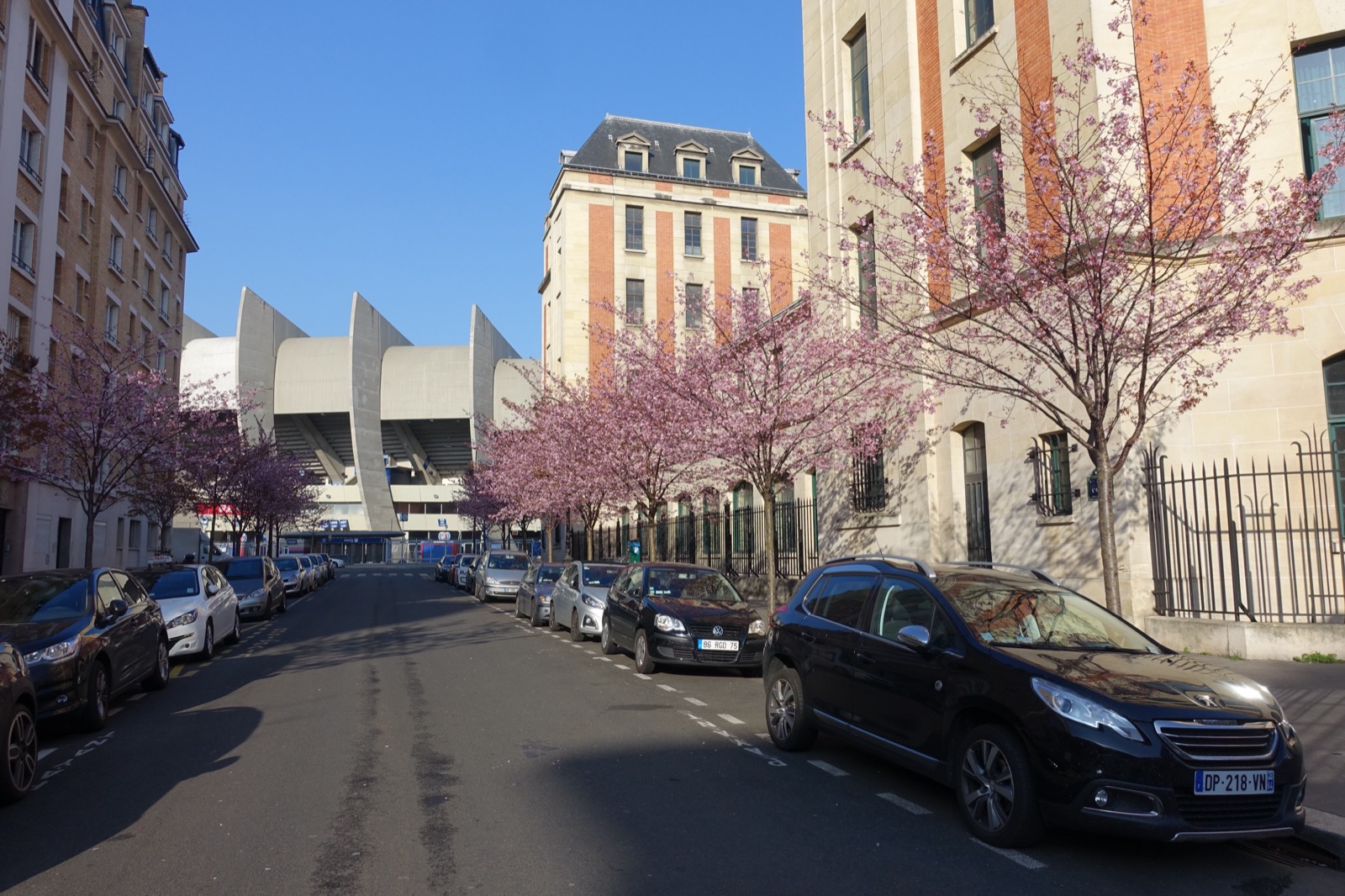
One thing to file away before you plan the day: the Parc's future is genuinely uncertain. PSG has been in a long, public standoff with the city over owning and expanding the ground, and has openly floated building a bigger stadium outside Paris instead. Nothing is settled, but a visit here in the late 2020s carries a faint "see it while it's here" quality that's worth knowing about.
Set your expectations right and you'll enjoy this more: Paris does not do the English matchday. There is no wall of fans in a bar by the ground, no session that starts at noon. The 16th arrondissement, where the Parc sits, is one of the wealthiest and most residential districts in the city, closer to embassies and old money than to football. Right around the stadium the options are thin and smart rather than rowdy.
The move that works, and the one a lot of Parisians and in-the-know visitors actually make, is to have your drink and your food in the centre and ride the metro out. Line 9 runs from the heart of the city, through Trocadero, straight to the ground, so you can sit somewhere good around Trocadero or the Passy streets, eat properly, and roll out to Porte de Saint-Cloud with time to spare. If you do want something near the turnstiles, the one solid, long-standing spot is Aux Trois Obus by Porte de Saint-Cloud, a big sports cafe that's been feeding match crowds since 1932; the brasseries Le Cardinal and Le Congres d'Auteuil round out a short list rather than a scene.
Do not count on a beer inside the ground. French law restricts alcohol at stadiums, and while clubs can apply for match-by-match exemptions, whether there's real beer or only the alcohol-free stuff at the Parc varies from fixture to fixture, and it tends to vanish entirely for the high-tension games. Treat any pint inside as a bonus, not a plan.
Two honest warnings. Paris has a serious pickpocket problem and a big-match crowd is a working environment for it, so keep your phone and wallet where you can feel them, especially in the metro crush. And there is an active, organised fake-ticket trade around PSG: in early 2026 French police broke up a single operation that had defrauded roughly two thousand fans. More on that below, but it starts before you leave home, not at the gate.
The Parc is unusually central for a big stadium, tucked into the southwest corner of the city. The main way in is Metro Line 9 to Porte de Saint-Cloud, which leaves you about a five-minute walk from the gates. Line 10 to Porte d'Auteuil drops you on the north side, a little further out. Unlike some clubs, your match ticket does not double as a transit pass, so buy a normal metro ticket. Give yourself time at the ground, too: the police close the streets around the Parc before kickoff, so aim to arrive at least an hour early.
Coming out is the usual single-stadium crush, everyone funnelling toward the same couple of stations. The local trick is to spread yourself: the ground is ringed by several stops, so walking to Porte d'Auteuil, Exelmans or Michel-Ange-Molitor instead of piling into Porte de Saint-Cloud with everyone else will often get you moving faster.
The Parc has a real, complicated atmosphere, and the honest version is a story, not a slogan.
The loud end is the Virage Auteuil, the south goal, home of the Collectif Ultras Paris. But that group only exists because of a rupture that killed the atmosphere here for years. The old ultras scene at PSG had two ends, Boulogne and Auteuil, and a troubled, sometimes violent history between rival factions. In 2010 the club took the drastic step of banning the organised ultras entirely, a policy known as the Plan Leproux. It worked in that the violence dropped, and it worked in that the Parc went flat and corporate and quiet for years. The Collectif Ultras Paris formed out of the old Auteuil support, negotiated its way back into the ground from 2016, and rebuilt the noise from scratch. That is why the Virage Auteuil is the singing end today and the Virage Boulogne opposite, once the hardcore kop, is now largely family seating. If you would rather watch in comfort than stand in the singing end, the side tribunes give the best view, and from the Boulogne side you can see the Eiffel Tower over the top of the stand.
Worth knowing, because it shapes what you'll see: the relationship between the ultras and the Qatari ownership is not a warm one even now. The Collectif Ultras Paris has publicly called for the club's bosses to resign after Champions League exits, and protested ticket prices and the club's transfer policy, all while generating the tifos that make the ground look spectacular on television. You're watching a partnership that is more of a standoff. This is what the full ground and the Auteuil end look like on a big night:
Get to your seat for the walkout. As the teams come out, the whole ground sings "O Ville Lumiere," oh City of Light, a slow, hair-raising anthem set to the tune Scottish fans will recognise as "Flower of Scotland." It carries some weight beyond football: it became the players' entrance song specifically after the November 2015 Paris terror attacks, and it's the piece of pre-money, pre-Qatar Paris that no amount of ownership branding has touched. Learn the first line and you can join the roar.
The other one to listen for is "Tous Ensemble On Chantera," all together we will sing, the Collectif Ultras Paris song that has become the ground's real anthem since the ultras came back in 2016. It's the one that erupted, players and manager and all, when the Champions League was finally won. It runs throughout the match and swells after goals. Between the two songs you get the whole of modern PSG: the older, civic identity and the terrace that rebuilt itself.
The flagship PSG store is on the Champs-Elysees at number 92, two floors with a PSG cafe attached, and it carries the full range including the thing that makes PSG merch genuinely distinctive. In 2018 PSG became the first football club ever to partner with Jordan Brand, putting the Jumpman logo on a football shirt; the black Jordan-PSG kit that first appeared at Anfield in the Champions League is a modern classic and the tasteful pick over the standard replica. There's a store at the ground and a larger city outlet on Rue Claude Farrere if you'd rather not fight the Champs-Elysees crowds.
Here is where PSG is genuinely unusual for a giant club, in both directions. The good news: you don't need to be a member, and you don't need family connections. Anyone can set up a free account on the club's site and buy single-match tickets directly, and for a lower-profile Ligue 1 game you can sometimes still get one in the week of the match. Be realistic about the odds, though: Paris has twelve million people and only one big club, so demand runs far ahead of a stadium in the forties, and even ordinary league games often sell out to members before they reach you, leaving the club's official resale exchange as the only way in. When you can buy direct, the catch is price as much as access; these are Paris tickets at Paris prices, and the cheap seats aren't cheap. One reassurance for a visitor: the Parc sees huge numbers of tourists every week, so you're completely fine turning up in a PSG shirt as a foreigner, and your e-tickets typically arrive about three weeks before the game.
The bad news is the top of the calendar. The Champions League nights and Le Classique, the match against Marseille, sell out inside the priority window for members and are close to impossible for an unconnected visitor at face value. Le Classique has its own quirk worth knowing: because of years of violence between the two sets of fans, Marseille supporters are banned from the Parc, so you'll see a one-sided, 100% home crowd, and it's still one of the most hostile nights in French football.
If a game is sold out, do not reach straight for the open market. Two things make PSG resale riskier than most. Tickets are named and your ID can be checked against the name at the gate, so a ticket bought off a stranger can simply fail to scan. And the fake-ticket trade here is industrial, as those two thousand defrauded fans found out. The one safe route into a sold-out match is the club's own official resale exchange, TicketPlace, where fans who can't attend put their real tickets back on sale through the club. Use that, use official hospitality if you want a guarantee and have the budget, and treat everything else as the genuine last resort it is. None of that is a Paris eccentricity, either: named tickets and a club-run exchange are where European ticketing has ended up, and PSG simply has more people working the gap between the two than most clubs do.
Time your trip to what you actually want. If you want the Parc at its loudest and you can get in, a Champions League knockout night is the whole point of this club now. If you just want to see PSG live without the ticket war, an ordinary league game is gettable, affordable-ish, and still gives you the walkout and the anthem.
And go with your eyes open to what this place is: a manufactured club that bought its way to the summit, run by an ownership its own hardest fans keep at arm's length, playing in a beautiful old ground it keeps threatening to leave. It should feel contradictory, because it is. Learn "O Ville Lumiere," keep a hand on your pocket, buy your ticket from the club, and you'll have seen the strangest and newest of Europe's giants for what it is.
Prices, ticketing rules and the Parc's own future all move fast here, and alcohol and bag rules shift fixture to fixture. Confirm anything time-sensitive the week you travel, and buy every ticket through the club.
PSG play at the Parc des Princes in the 16th arrondissement of Paris, one of the wealthiest and most residential districts in the city. The club's future there is genuinely uncertain: PSG has been in a long standoff with the city over owning and expanding the ground and has openly floated building a new stadium outside Paris instead.
For a normal Ligue 1 game, often yes. Anyone can set up a free account on the club's site and buy single-match tickets directly, and for a lower-profile game you can sometimes still get one in the week of the match, though Paris has twelve million people and only one big club, so demand runs ahead of the stadium and these are Paris prices.
No. The Champions League nights and Le Classique against Marseille sell out inside the members' priority window and are close to impossible for an unconnected visitor at face value, and there's an active, organized fake-ticket trade around PSG that has defrauded thousands of fans. Tickets are named and checked against ID, so use the club's own resale exchange, TicketPlace, instead.
Metro Line 9 to Porte de Saint-Cloud leaves you about a five-minute walk from the gates; Line 10 to Porte d'Auteuil drops you on the north side, a little further out. Your match ticket doesn't double as a transit pass, so buy a normal metro ticket, and give yourself extra time since police close the streets around the Parc before kickoff.
The loud end is the Virage Auteuil, the south goal, home of the Collectif Ultras Paris, who negotiated their way back into the ground from 2016 after the club banned organized ultras entirely in 2010. The Virage Boulogne opposite, once the hardcore end, is now largely family seating; the side tribunes give the best view if you'd rather watch in comfort, with the Eiffel Tower visible over the Boulogne stand.
Dates more than a few weeks out show as “date & time TBC”. When do fixtures get confirmed? →