Flamengo
The most-supported club in Brazil, in one of the most storied stadiums on earth. Buying with a passport, the face scan to register before matchday, the metro to the door, and the honest word on a Maracanã matchday.
By Carlos O. · Last updated 7 Aug 2026
Getting a ticket
Unlike the socios-only wall of Argentine football, a tourist genuinely can get in, and can buy online direct from the club. Most home-game tickets sell online, but the Maracanã also runs a walk-up box office (open 10am-5pm the day before, and until half-time on matchday) plus a sales counter at Flamengo's Gávea headquarters, for anyone who missed the online window. A foreign buyer uses a passport, so no Brazilian tax number (CPF) is needed, despite widely repeated advice saying otherwise, though passport-based registrations get manual review by the club rather than instant approval, so register early. The real step to plan is facial recognition, required by Brazilian law (the 2023 Lei Geral do Esporte) at stadiums over 20,000: register your passport and a face scan on Flamengo's biometrics site several days ahead, then the turnstile reads your face at entry. Nação membership gets priority and discounts for the cheap popular sections. Flamengo fill the Maracanã, which it shares with Fluminense on alternating dates, so buy ahead. Brazil generally allows away fans, though Rio derbies can be restricted, and Fla-Flu itself is the toughest single date to buy online, known to crash under demand, so start early or use the walk-up window. Touts are pointless here, since a ticket registered to someone else's face will not scan.
- 1Buy online · direct from the club, subject to the local rules
- 2A reputable matchday operator · a trusted company bundles a genuine ticket with a local host and a transfer
Flamengo are a phenomenon of scale. The Rio club, red and black, "Rubro-Negro," "Mengão," claims the largest fanbase in Brazil and one of the largest in the world, tens of millions strong, and when a decent slice of that support fills the Maracanã the effect is one of the great experiences in the game. This is the club of Zico, the idol of the extraordinary 1981 side that won the Copa Libertadores and then thrashed Liverpool to be crowned world champions, and of the modern golden era that brought the dramatic 2019 Libertadores, won in the last seconds through Gabriel Barbosa. Flamengo carry themselves as Brazil's team, and the numbers largely back them up.
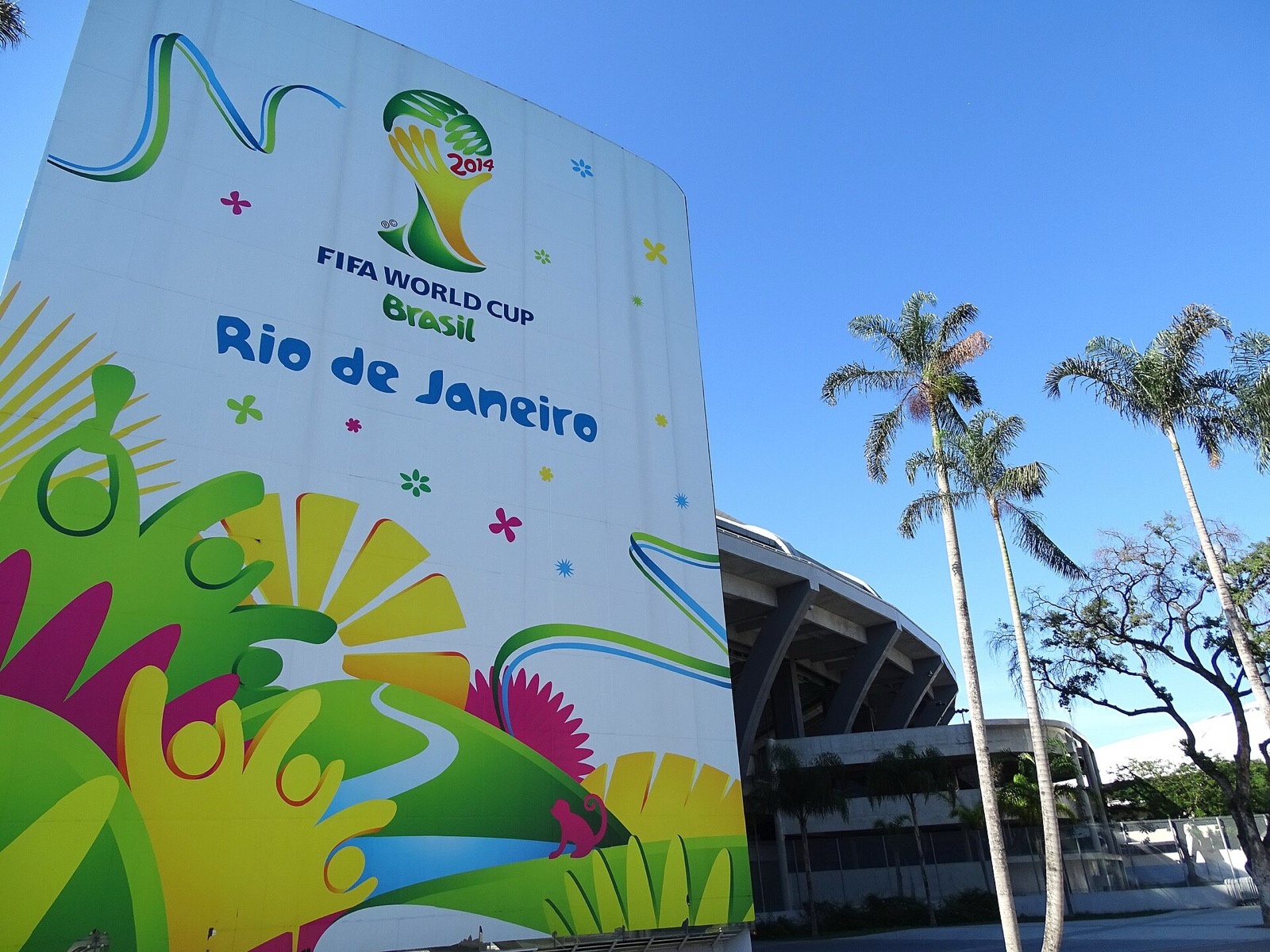
The stage is the Maracanã, officially the Estádio Jornalista Mário Filho, one of the most famous stadiums on the planet. It hosted the match that decided the 1950 World Cup, the infamous "Maracanazo," Brazil's national trauma of losing to Uruguay, it saw Pelé score his thousandth goal, and it staged the 2014 World Cup final. Now an all-seater oval of around 78,000, shared with Fluminense, it is a genuine pilgrimage site for anyone who loves football, and a Flamengo game is the best way to see it full and roaring.
The great local rivalry is the Fla-Flu, against Fluminense, first played in 1912 and named by the journalist Mário Filho, whose name the stadium itself now carries. The matches against Vasco da Gama and Botafogo are not far behind. A Rio derby at the Maracanã, with the stands split into vast blocks of colour, is among the sights of South American football.
Getting a ticket
Unlike the socios-only wall of Argentine football, a tourist can genuinely get into a Flamengo game, and can do the whole thing themselves. Ignore the widely repeated warning that you need a Brazilian tax number, the CPF, to buy: a foreign buyer uses a passport instead, and the biometric system the Rio clubs run, Bepass, tells foreigners without a CPF to use their passport number. So the first rule of buying a ticket abroad, go through the club and never through a stranger, holds here in its ordinary form. Flamengo sell home games entirely online through their own site, so that is the whole route: there is no ticket office at the Maracanã on matchday, and online sales close before kickoff rather than running up to it.
What does need planning is the face scan. Brazilian law requires facial recognition at the turnstiles of any stadium holding more than 20,000, and at the Maracanã that is simply how you get in. Register once on Flamengo's biometrics site, uploading a photo of your passport and a scan of your face, and do it several days out rather than on the way to the ground, because a photo the system rejects takes time to redo. There is no paper ticket at the end of it: the gate reads your face. Carry the original passport you registered with anyway, because that document is what your ticket is tied to and photocopies or a photo on your phone are not accepted. One registration covers every ground on the same system, so the same face scan gets you into a Fla-Flu on Fluminense's matchday too. It also settles the tout question, since a ticket bought from a stranger is registered to their face and will not let you in.
The thing to understand about the sale is that it is a staged queue, not a shop. Tickets open to the club's Nação members in waves over about a week, by membership tier, and only then to the general public, by which point the cheap sections behind the goals are often gone. The public sale itself runs behind a virtual waiting room, so plan to be at a keyboard when it opens, not browsing later that evening.
That queue is also the argument for joining Nação yourself. The entry tier aimed at fans outside Rio costs less than five dollars a month and carries priority for one Maracanã match a season, which is exactly the shape of a visitor's trip. For a single game it is cheaper and more reliable than taking your chances in the general sale, and members pay a fraction of the public price in the popular sectors. A matchday package that bundles a ticket with a guide is a convenience worth paying for if you would rather not deal with any of the admin, but it is not the only way in for a visitor, and you should not let anyone tell you it is.
Getting there
The metro puts you at the door, and it is far and away the best way to arrive, since the roads around the Maracanã clog badly on a matchday. One detail worth getting right before you set off: the ground sits on Line 2, and the station has been signposted Rei Pelé – Maracanã since May 2026, in honour of the thousandth goal he scored there. If you are staying in Copacabana or Ipanema you are on Line 1, so you ride into the shared central stretch, anywhere from Botafogo up to Central, and change onto a Line 2 train. From Lapa it is the other way round: walk the few minutes to Cinelândia or Carioca and you can board a Line 2 train straight to the ground.
Check your gate before you pick your station, because the club and the metro split the crowd between two of them. Gates A, B and C, which cover the Oeste and Sul sectors, are the ones at Rei Pelé – Maracanã. Gates D, E and F, for Leste and Norte, are served by São Cristóvão, one stop away. Turning up at the wrong one means a long walk around the outside of a full stadium. Aim to arrive at least ninety minutes early to soak up the build-up. Going home is the part to plan for: the metro runs until around midnight, and a 21h30 kickoff finishes close to 23h20, so check the last train before the match it.
Making a day of it
The Maracanã neighbourhood itself is ordinary working Rio, with no bar-and-restaurant strip, so the pattern is to base yourself in the parts of the city you would be enjoying anyway and ride in. Most visitors stay down by the beaches, in Copacabana or Ipanema, or in the centre; the nightlife and samba district of Lapa, with its arches and street bars, is a lively spot for a pre- or post-match drink. Lapa itself has no metro station, so you walk a few minutes to Cinelândia or Carioca, or hop the VLT tram, and from either of those you get a Line 2 train straight to the ground, which the beach neighbourhoods do not. The build-up on matchday is a street party in red and black, with shirts, chants and food stalls filling the approaches to the stadium hours before kickoff, so the walk in from the metro is part of the show. The carioca pre-match runs on cold beer, a chopp or a lata straight from a cooler, a caipirinha, and street snacks off the stalls, a coxinha or a hot pastel eaten on your feet in the crowd. Keep the usual Rio street sense about your valuables in the crowds, but a Flamengo matchday is overwhelmingly about colour and noise.
Inside, and where the noise is
The Maracanã is a huge oval, and the noise is driven by the torcida packed behind the goals, where the organised supporter groups lead the singing, the flags and the choreographies from before kickoff. On a big night the wall of sound from a full Flamengo crowd is enormous, and the sheer size of the support is the thing that sets it apart; this is less an intimate cauldron like a smaller ground and more a vast, rolling ocean of red and black. If you want to be in the thick of it, the upper Norte is where the organised torcidas and the big flags live. Read the sector map on the sale page before you buy, though, because the away allocation moves between Norte and Sul from match to match, and in the Carioca the club sells by colour rather than by compass point, so a guide written around Norte and Sul will not match what you see at checkout. Note too that outside the premium seats you are buying a sector, never a numbered seat, so getting in early decides where you actually stand. For a calmer view of the whole spectacle, the side stands are the pick, and on a package that is usually where you will sit.
Unlike in Argentina, Brazilian football generally does allow away fans, housed in a segregated section. The Rio derbies are currently the opposite of a home-only game: Flamengo, Fluminense and Vasco have an agreement covering 2025 and 2026 to play their meetings at the Maracanã with the ground split evenly between the two supports, and the visiting sector goes on general sale like any other.
This is the Maracanã singing "uma vez Flamengo":
The songs
Flamengo's support sings without pause, a deep and famous songbook led from the torcida ends, much of it built around the club's self-image as the people's team of Brazil. The anthem, with its roared "uma vez Flamengo, sempre Flamengo," once Flamengo, always Flamengo, is belted out by the whole ground, and the scale of the sound when tens of thousands join in is the point. You do not need the words; you need to be there when it lifts.
Merch
The official Flamengo store has a presence at the Maracanã on matchdays and at the club's own sites around the city, including the Museu Flamengo, so picking up the red-and-black is easy. The museum itself is a good non-matchday visit for a fan.
One last thing
Come for the scale and the setting. Get your ticket the sensible way, direct from the club once your face is registered, ride the metro into one of the great stadiums in world football, and get there early for the red-and-black street party outside. When a full Maracanã sings "uma vez Flamengo," you are hearing one of the largest and most passionate supports on earth in one of the sport's true cathedrals, and there are few better days out in the global game.
Ticket rules, biometric registration, prices and derby restrictions all change; check anything time-sensitive close to your trip, and buy through the club, never a tout.
Frequently asked questions
Where do Flamengo play?
Flamengo play at the Maracanã, officially the Estádio Jornalista Mário Filho, in central Rio de Janeiro. It's one of the most famous stadiums on the planet, host to the 2014 World Cup final and to the match that decided the 1950 tournament, and now an all-seater oval holding around 78,000 that Flamengo shares with Fluminense.
Can tourists buy Flamengo tickets?
Yes, and you can buy them yourself online. Foreign buyers use a passport, so you do not need a Brazilian tax number, the CPF, despite a lot of older advice that says you do. What you do need is facial-recognition registration, which is now the law at large Brazilian stadiums: you register your face and your passport once with the club before matchday, then the turnstile scans your face to let you in.
What is the best way for a tourist to buy Flamengo tickets?
Buy direct from the club. Register your face and passport on Flamengo's biometrics site first, well before matchday, not on the way to the ground, then buy online like anyone else. Nação members get earlier access and cheaper prices in the popular sections, so the best-value areas can go before general sale. A matchday package with a guide is a convenience, not a necessity, and touts are worth avoiding entirely, since entry is by your face and a stranger's ticket will not scan.
How do you get to the Maracanã?
Take the metro, which stops at the ground. The station is on Line 2 and is signposted Rei Pelé – Maracanã. From Copacabana or Ipanema you are on Line 1, so ride into the shared central stretch and change onto a Line 2 train; from Lapa you can walk to Carioca or Cinelândia and board Line 2 direct. Check your gate first, because Gates A, B and C use the Maracanã station while Gates D, E and F are served by São Cristóvão. Aim to get there at least ninety minutes early for the street party outside, and check the last train home if it is a late kickoff.
Where is the atmosphere at the Maracanã?
The noise is driven by the torcida packed behind the goals, where organized supporter groups lead the singing, flags and choreography from before kickoff. A full Flamengo crowd is less an intimate cauldron and more a vast, rolling ocean of red and black. For a calmer view of the same spectacle, the side stands are the pick.