Boca Juniors
Maybe the most intense atmosphere on earth, in a three-sided stadium in a working-class Buenos Aires barrio. Why you can't just buy a ticket, how to actually get in, and how to do La Boca safely.
By Carlos O. · Last updated 7 Aug 2026
Getting a ticket
The hardest ticket here, and the honest answer is a tourist does not buy a normal one. Boca itself says it plainly: the club does not sell tickets to the public, because socios (members) are what fill La Bombonera. The domestic membership queue runs years long, and even Boca's cheap international membership for people living abroad only earns a shot at a seat when capacity allows, arranged match by match, with no guarantee, and it does not cover the Superclásico against River at all. Argentina's nationwide ban on away fans, in place since 2013, has been easing since 2025 for clubs outside Buenos Aires City, and Boca itself has started traveling with its own away support again outside the city (5,000 fans authorized for an away trip in Aug 2026), but Boca and River still keep their own ground, derby included, for their own members, so there is no visiting-fan route in either direction at La Bombonera. In practice, the way this actually works is a local connection, a socio willing to bring you in, or a reputable matchday operator who gets you a genuine seat through a member's card plus a local host, typically well over US$100 and more for a big fixture. Skip the touts outside the ground: the tickets are usually fake, and club-sanctioned member patrols and police checkpoints are watching for exactly this.
- 1A reputable matchday operator · a trusted company bundles a genuine ticket with a local host and a transfer
- 2A local connection · a member who can bring you in as their guest
La Bombonera is, for a lot of people who have been everywhere, the single most intense football atmosphere in the world, and Boca Juniors is the club that fills it. Boca are the great popular club of Argentina, born in 1905 in the dockside immigrant barrio of La Boca, blue and gold, and they claim, only half joking, to be supported by "la mitad más uno," half of the country plus one. This is Maradona's club and Riquelme's club, a place where football is closer to faith than anywhere else, and the stadium is the reason to come.
The ground, officially the Estadio Alberto J. Armando, is universally known as La Bombonera, the chocolate box, because of its strange and brilliant shape: three impossibly steep sides rising almost vertically over the pitch, and a fourth side that is a flat wall of executive boxes rather than a terrace, which gives the place its unique look and its extraordinary acoustics. Fans say "La Bombonera no tiembla, late," it does not tremble, it beats, and when the hardcore support known as La Doce, the twelfth man, get going behind one goal, jumping and singing for hours right above the visiting team's dressing room, the whole structure genuinely seems to pulse. It is a sensory experience more than a spectator one.
The rivalry that defines Boca is with River Plate, and the Superclásico between them is routinely called the biggest and most heated derby on the planet. It also carries a heavy recent history: the 2018 Copa Libertadores final between the two was thrown into chaos when the Boca team bus was attacked by River fans, and the game was eventually moved all the way to Madrid. That sits within a bigger picture: Argentine football has a long, complicated history around its organised supporter groups, the barras, and the heavy security operation built up in response is a large part of why the matchday, and the ticketing, works the way it does for a visitor.
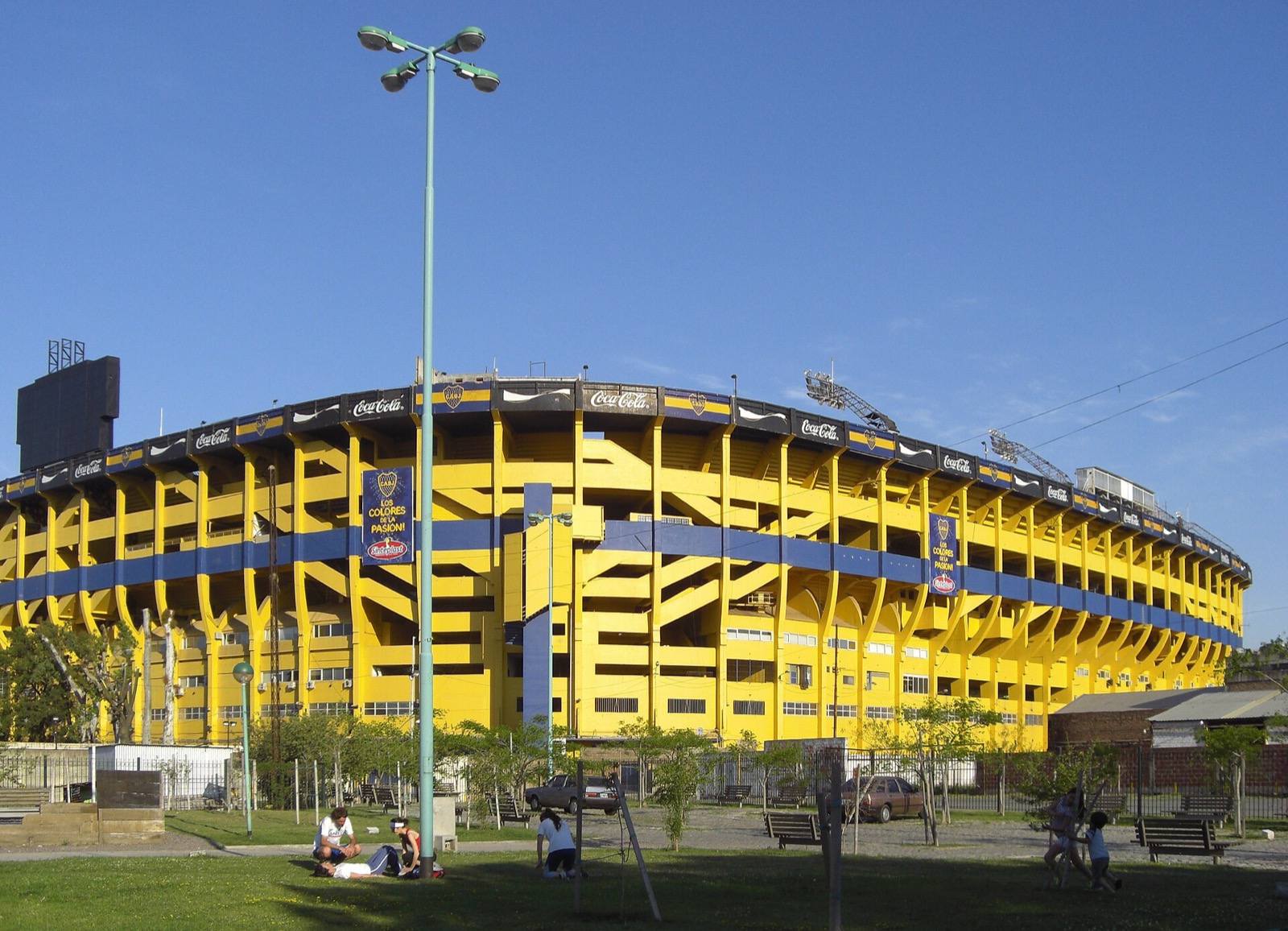
Getting a ticket, which is the hard part
Start here, because it shapes the whole trip: as a tourist you essentially cannot buy a normal Boca ticket, and understanding why saves you from a scam. Argentine league tickets go to socios, the members, through a membership card system; there is no meaningful general sale for a visitor, and away fans were banned from league matches nationwide from 2013, so a big chunk of the ticketing world you know barely exists here. That ban began a phased lifting in 2025, but the Buenos Aires giants and the highest-risk games, above all the Superclásico, are still played to a home-only crowd.
What you must not do is buy from anyone outside the stadium. Those tickets are almost always fake, they are tied to a member's card that is not yours, and you will be turned away at the police checkpoints that ring the ground. The realistic and safe route is a reputable matchday operator, a specialist company that bundles a genuine ticket with a local host who meets you and a transfer to and from the ground. If you happen to have a local connection, a socio who can bring you in as their guest, that is the other way in. What you cannot do is simply buy off the club as a walk-up tourist: the buy-direct-from-the-club rule that holds across Europe is precisely the one that does not work at La Bombonera. A package is not cheap, typically well over a hundred US dollars, but it is the honest way in and it solves the access and the safety questions at once. Book it in advance from a name you can check, never from the street.
Getting there, and doing La Boca safely
La Boca is a working-class neighbourhood in the south of the city, and it needs a clear-eyed word rather than either panic or naivety. The famous painted Caminito street and the blocks right around it are a fine, colourful tourist stop by day, but the barrio beyond that strip is poor and can be unsafe, and it is not a place to wander on your own, least of all around a match with cash and a phone on show. There is no subte line to the ground.
This is exactly why the packaged approach makes sense: the transfer and the host are not luxuries here, they are the sane way to arrive and leave. If you are exploring the city under your own steam, base yourself somewhere like San Telmo or the centre, visit Caminito in daylight with the crowds, and let an arranged car handle the matchday trip to and from La Bombonera. Bring only the essentials, a phone, a little cash and ID, and leave the rest at your accommodation.
Inside, and where the noise is
There is barely a calibration to give, because a Boca home game is loud almost by definition. The engine is La Doce, the hardcore support packed into the standing popular behind one goal, who lead the singing, the bouncing and the flags without pause from before kickoff to the final whistle. The popular ends are standing-only and are where the noise and the intensity are concentrated; the seated plateas up the steep sides and the wall of palcos opposite give you a calmer, more comfortable view of the whole thing, and for a first-timer on a package that is usually where you will be, which is no bad thing given how overwhelming the popular can be.
Wherever you sit, the experience is the same: a stadium so steep and so close that the crowd feels like it is on top of you, and a wall of blue-and-gold sound that does not let up. This is the one to feel, not to analyse. Here is the Bombonera in full voice:
And a Superclásico recibimiento shot from the stands, our own footage:
The songs
The support sings continuously, a rolling songbook of Boca anthems led from La Doce, much of it built around the club's barrio identity and its rivalry with River. You will not follow the words, and it does not matter; the thing is the sound and the movement, an entire end jumping in time for two hours. The most famous chants are about loving Boca "everywhere I go" and about the rivalry, and the noise is the point far more than the lyrics.
The previa, and what to eat
An Argentine matchday is not really about the ninety minutes alone; it is about the previa, the long build-up beforehand, and the food and drink that carry it. The classic is the choripán, a split chorizo grilled over coals and pressed into bread with chimichurri, sold from parrilla stalls around any ground; its heftier cousin is the bondiola, a slow-cooked pork shoulder sandwich. And the drink running through all of it is fernet, the bitter Italian-Argentine amaro drowned in Coca-Cola, poured dark and passed around. A good operator or host will fold a real previa into the day, an asado and a fernet con coca before you go in, and even on the packaged route a choripán with the crowd is part of the occasion rather than a detour from it.
Merch
The official Boca club store is at the stadium, alongside the Museo de la Pasión Boquense, the club museum, which is genuinely worth doing on a non-match day and is part of most stadium-tour packages. There are official stores in the centre of Buenos Aires too, which are the easier option for a shirt if you are not going out to La Boca separately.
One last thing
Come for the feeling, and organise it properly. Do not chase a cheap ticket on the street, because it will be fake; book a genuine matchday package with a host and a transfer, treat La Boca with sensible respect, and get yourself inside La Bombonera for the thing you actually came for. When the popular starts to jump and the whole three-sided box begins to beat, you will understand why so many people who have watched football everywhere say this, more than any famous ground in Europe, is the one that got closest to the heart of the sport.
Ticket access, package operators, prices and safety advice all change; check anything time-sensitive close to your trip, and only buy through a reputable, verifiable operator, never on the street.
Frequently asked questions
Where do Boca Juniors play?
Boca play at La Bombonera, officially the Estadio Alberto J. Armando, in the dockside barrio of La Boca in Buenos Aires. Three sides rise almost vertically over the pitch while the fourth is a flat wall of executive boxes, giving the ground its odd shape and famously intense acoustics. Fans say it doesn't tremble, it beats.
Can tourists buy Boca Juniors tickets?
Not through a normal sale. Argentine league tickets go to socios, the members, and there's no meaningful general sale for a visitor; away fans have been banned from league matches nationwide since 2013. The realistic route is a reputable matchday operator that bundles a genuine ticket with a local host and a transfer, typically well over 100 US dollars.
How do I get Boca Juniors tickets without getting scammed?
Never buy from touts outside the ground. Those tickets are almost always fake, tied to a member's card that isn't yours, and you'll be turned away at the police checkpoints ringing the stadium. If you have a local connection, a socio who can bring you as a guest, that works too, but a reputable operator with a local host and transfer is the safe route for everyone else.
How do you get to La Bombonera?
There's no subte line to the ground, and La Boca beyond the touristy Caminito strip can be unsafe, so wandering in on your own isn't the move. The sane way is an arranged transfer as part of a matchday package, which handles the ride to and from the stadium along with your ticket and a local host.
Where is the atmosphere at La Bombonera?
The engine is La Doce, the hardcore support packed into the standing terrace behind one goal, who lead the singing and bouncing from before kickoff to the final whistle. The seated plateas up the steep sides and the wall of boxes opposite give a calmer view of the same thing; on a package you'll typically sit there, which is no bad thing given how overwhelming the popular can be.